Showing posts with label heritage railways. Show all posts

Saturday, 29 April 2023

Somerset and Dorset Delight


It's always a pleasure getting the excellent S&D Telegraph, the house magazine of the Somerset and Dorset Railway Trust down in Midsomer Norton. It's a high quality magazine but the best thing about it is the content, which is superb. This current issue (number 62) contains articles on a walk along the whole route in 1976, the 9F that the group is purchasing for eventual use at Midsomer Norton, general articles on all aspects of the rebuilding and maintaining of the line and reports on volunteers.

The S&D revival, in my opinion, is the most important thing in UK rail preservation. There are stirrings of rebuilding at several points, from Midford in the north down to Spetisbury in the south. Midsomer Norton and Shillingstone are both proceeding with establishing working heritage railways.

I worked many years at Midsomer Norton and saw huge progress from a trackless station to an almost mile long route (including double track!) and a fully rebuilt signalbox and greenhouse. I had to give up due to health issues but I still follow developments closely, mainly through the Telegraph magazine.

So the station is restored, the line plans to extend both north and south and a big locomotive is coming. The group need to break out from the Misdomer Norton South site and start to build a premier league line where big locos like the 9F can really see some proper work.

I'd urge anyone with an interest in the S&D to join the group at Midsomer Norton and help make this happen, whether by volunteering, supporting financially or just spreading the word!

The group can be contacted via their website at www.sdjr.co.uk and emailed at general@sdjr.co.uk


Friday, 3 August 2018

Padstow - what were they thinking?


(All pics copyright Steve Sainsbury/Rail Thing)


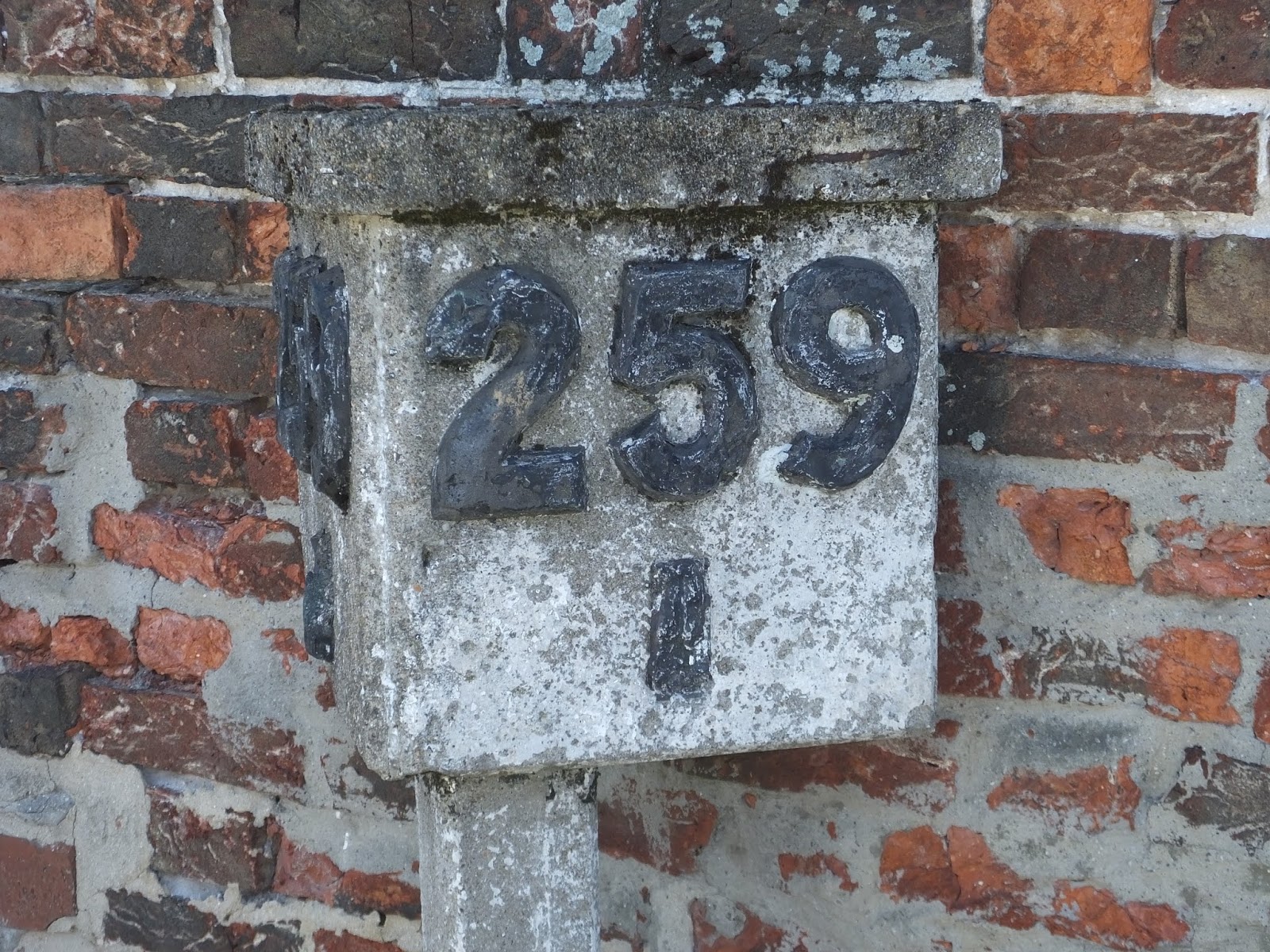
Padstow was once the furthest point you could reach on the Southern Railway/Region from London - 259 and a quarter miles. You can still see the milepost if you know where to look in Padstow, but not at its original location.

Padstow had two lines, one from Bodmin Road on the GWR Cornwall Main Line and the other via Okehampton and Halwill Junction on the North Cornwall line. Both lines were closed in 1967, just before the summer season. I have read that Padstow couldn't wait to lose its railway, but I suspect this is apocryphal!

Today Padstow is a huge tourist draw, we were down there for a week in June, The location is fantastic and as someone used to the crowds in the various Disney parks around the world I didn't find the crowds too daunting!

But today you can't reach Padstow by train. It is ridiculous. A railway to Padstow would take many cars and lorries off the road and would be an attraction in itself. It will also make both Padstow and Wadebridge resilient to transport problems as the energy crisis deepens. The sad thing is that much of the route is still there, tantalisingly close, ending in a field somewhere to the east of Wadebridge. The Bodmin and Wenford Railway run heritage trains on the line, and it's a very nice set up.

Wadebridge is the other issue. A large town for Cornwall with no modern transport link. It needs one. The line would run from Bodmin Road through Bodmin and Wadebridge to Padstow. Ideally it would offer a cheap transport option for passengers and freight, with premium rate heritage trains in the summer. Incredibly street running has already been proposed for the section through Wadebridge, which would link the line to the east to the existing and fully preserved for future rail use stretch to the west of Wadebridge which currently serves as a cycleway.

It seems odd that Padstow lost its trains while other smaller, or similar sized, resorts kept theirs. St Ives, Newquay, Falmouth and Looe now have thriving branch lines. I suspect the reason was regional rivalry plus the odd operating set up on the lines at Bodmin with two termini rather than a single through station. It could be that Bodmin needs a new through station to make the journey quicker.

The whole issue underlying this is that many lines were closed in haste, and would never close now. In the 60s we thought road traffic would last for ever, we are a lot wiser now! All year railways are needed in many parts of the UK, some routes are already partially or even completely restored by heritage groups. Swanage is now operating both  heritage and Network trains, the line has become 'real' again and Swanage is thriving because of it. Elsewhere some Network lines have heritage aspects to them, the Looe line for example. 

Padstow is a honeypot just waiting to be reopened. What are we waiting for?

Wednesday, 9 August 2017

East Somerset Railway - 6.8.2017


It's almost becoming a tradition, my birthday trip to the East Somerset Railway! This year was even better as, purely by chance, the dining train was running. This was a superb experience, great food and atmosphere and excellent service throughout. Highly recommended!!


After the meal I trekked round Cranmore station trying to get photos. I've never found this line that easy to photograph, but the shots are there if you look for them! I also got a bargain in the shop - a secondhand copy of The Longmoor Military Railway (David & Charles) at just £3.

Monday, 31 October 2016

Sheffield Park 8 July 1977

SHEFFIELD PARK


(All pics 8.7.1977 copyright Steve Sainsbury/Rail Thing)


Almost 40 years have passed since I took these photos in July 1977 of the Bluebell Railway. Back then it was an all-steam line just 4 miles long, linking the country station of Sheffield Park to the extraordinary junction station at Horsted Keynes. Remarkably up until 14 years before these pics you could reach the Bluebell via the Southern Region's electrified branch from Haywards Heath to Horsted Keynes. It took the Bluebell another 50 years to reconnect with the network! But the line also owns the trackbed of the Haywards Heath line so at some point in the future the original Bluebell connection will be regained though, sadly, unlikely to be electrically operated! 

So back in 1977 the Bluebell was a very pleasant and self contained set up, with loads of classic steam locomotives and coaches and for those of us brought up in Sussex it was a fairly regular treat to travel on the line. There was hardly a house visible on the entire route and this section really showed the wonderful rural nature of the line. Stations were built on a grand scale for such a rural line, with the earthworks, bridges and tunnels built for double track, which was present between East Grinstead via Horsted Keynes to Haywards Heath. The section south of Horsted Keynes was always single track.

I've always felt that heritage lines tend to freeze time and old pics of them can almost be reproduced today, and that this static element makes them less interesting than network lines. But as time passes that's fading. It's true that the biggest clue to the age of this pics is the array of classic cars in the exterior shot of the station, but fashions etc also date a pic. As of course does the traction used - locos come and go, go out of ticket, become unuseable or get sold on. There is change on heritage lines after all!

Overall of course the Bluebell has changed enormously since the seventies. Freshfield Halt has closed for example, there are new stations at Kingscote and East Grinstead, with West Hoathly always a possibility in the future. The line is no longer all steam, and of course there are now excursions off the network, which bring all sorts of visitors to the line. Facilities have improved both front of house and behind the scenes. The little line has become big business, but you can still savour the lovely Sussex countryside from inside a vintage carriage - and see more of it now on the longer journey!

Thursday, 11 February 2016

Avon Valley Railway 9.2.2016


BITTON


(All 9.2.2016 copyright Steve Sainsbury/Rail Thing)


Probably the closest heritage railway to me (other than the Bristol Harbour Railway) is the Avon Valley Railway. It's a strange set up with the trains running out from Bitton towards Oldland Common firstly, followed by a return to Bitton, then a 15 minute wait for the trip out to Riverside. There are about ten minute waits at each end. Basically it means that one train can provide the service. We were lucky to get - again - the DMU on Tuesday. A real test of a heritage line is whether kids like it, and we had a five year old and a seven year old to keep entertained. They oved it and particularly liked the opportunity to go 'free range' throughout the two carriages, plus of course get the view through the front window. They were quickly told NOT to distract the driver!

AVR tickets are rover tickets so you can do as many trips as you want. We did four or five! There's also excellent catering facilities at Bitton and the food was good value, good quality and decent helpings! We made a second trip to the catering coach for tea and cakes later in the day.

The shop is pretty good, mainly because they have an excellent selection of secondhand railway books at VERY reasonable prices and not just the usual generic thoughtless Christmas present dross!

There were a few steam locos at the end of Bitton platform, one actually seemed to be in steam but wasn't being used. I don't think I've ever actually travelled behind steam on the AVR, but that's not a big deal for me anyway!

The only real issue I have with the AVR is its apparent lack of ambition. Bath lies just a mile or two beyond the current eastern terminus at Riverside - a run into the city would attract many extra visitors, mainly from Bath towards Bitton. The original plans for the reopened line were probably 50 years ahead of their time, a commuter service between Bath and Bristol was proposed, with some heritage  services at weekends. Perhaps it's now time to look towards the future and realise that the original plans were simply way ahead of their time. Having travelled between Bath and Bristol lately, on a Sunday evening, on a train that was packed to standing, perhaps it's time to address the capacity issue by offering an alternative. Bath Green Park station is still there ... and the line can be reinstated without too much difficulty ... and eventually the S&D will be returning to Bath. The best days for the AVR lie ahead in the future, but for now it is a very pleasant way to spend a few hours on a winter's day!


Tuesday, 21 July 2015

Return to Ropley - 39 years on!


(All copyright Steve Sainsbury/Rail Thing 'Then' (B&W) are 24.6.1976. 'Now' (Colour) are 18.7.2015)


I was lucky enough to visit the Watercress Line on Saturday, though sadly not able to travel on it. For a change I called in at Ropley and Medstead as I've always found the two termini hard to photograph. There were no such problems at the two intermediate stations!

I last visited Ropley in June 1976, before the line was reopened, and it was in deep sleep. The station is completely transformed now, as is the area it sits in, but fortunately there's no housing development and the location is still very rural. The station has of course been totally restored and the up platform and buildings have reappeared. There's a signalbox and also a large locomotive works. All in all a very pleasant spot and still with plenty of railway atmosphere.

I was lucky enough to travel on the line in BR days a few times, and I've also been a couple of times since reopening. I still find it odd that this useful line was closed, serving the large town of Alresford and also providing an excellent alternative route when the main line is closed or blocked. I'm sure the missing link via Itchen Abbas will be rebuilt in the future and the line morph into a community line with a proper 365 day service but with plenty of heritage atmosphere and trains of course!


More info (from Wikipedia)

Ropley railway station is a railway station in RopleyHampshireEngland, which opened on 2 October 1865.

History

The station was opened by the Mid-Hants (Alton Lines) Railway (MHR) on 2 October 1865. The MHR was leased to the London and South Western Railway (LSWR) in August 1880, which fully absorbed the MHR in June 1884. The LSWR amalgamated with other railways to form the Southern Railway on 1 January 1923.
The station was closed by British Rail on 5 February 1973.

Preservation

Ropley railway station was reopened by the Mid Hants Railway (Watercress Line) on 30 April 1977. It is an intermediate station on the preserved Watercress Line, which runs from Alton to New Alresford.
The main locomotive shed and workshops for the Mid Hants Railway are located just to the east of Ropley station.
The station gardens feature notable yew topiary, which has been in situ for over 100 years (an 1898 postcard shows the topiary well established).
A footbridge was added to the western end of the station in 1986. This was recovered from the closed station at North Tawton in Devon in August 1983, restored and installed by volunteers.

Footbridge

In 2012/13, a footbridge, originally located at King's Cross station in London, was dismantled and later re-erected at Ropley station for a new lease of life, above the maintenance shed, where passengers can walk over and view the works below.

Monday, 7 April 2014

a salutary lesson


Hopefully you're puzzled, or at least intrigued, by the title of this post! We'll get there, but first some background ...

My brain is full of little images and memories, like most peoples I suppose. This is a specific one. I remember seeing, in the early sixties, a newspaper article about a group of plucky volunteers restoring a branch line down in Kent. They were almost there having already raised the money, which seemed like a huge sum of money to me but would be chickenfeed today. The article was accompanied by a very emotive picture.

Then I moved on (school, holidays etc) and lost interest in railways ... until rediscovering them in the late 60s.

I discovered closed lines and holiday lines and preserved lines. The Bluebell, Dart Valley etc. I got that little annual book that listed heritage lines and started reading through.

But try as I might I could not find the Westerham Valley Railway. It finally sank in that all that promise, all that hope, had obviously come to nothing.

The full story of what happens follows at the end of this piece, so I won't go over it here in detail. But the scheme did fall through, seemingly due to council shenanigans and other strange 1960s style stuff. The vile M25 was involved and probably a few backhanders. This was back in those grey road lobby days, which to us  now is a different country.

So the promising pioneer heritage line didn't happen. And neither did millions of pounds of economic activity. Neither did friendships that never happened because the line wasn't there to bring people together. Businesses that would have formed and thrived never happened. And house prices have probably been a few points below what they would have been if there had been a commuter rail service to Westerham, Brasted and Chevening.

What a loss. The Westerham Valley Railway was the PERFECT heritage line. A main line connection, three stations, an intact infrastructure, the ideal length (between 4 and 5 miles), huge catchment area. And the potential for a real community service to keep commuters connected.

So the real salutary lesson is to all those people that never got their train, all those businesses that never got their customers. And the lesser lesson is to us, to never really rest on our laurels and never step off the accelerator until the cat is in the bag.


The two pics that accompanied that original 1960s article!

Classic shot of the route.


My favourite shot of the line.


Further information - (via Wikipedia)

Westerham Valley Railway Association

Flyer distributed by the Westerham Valley Railway Association in c1963

In 1962, the Westerham Valley Railway Association, born of a merger between two local interest groups, the Westerham Branch Railway Passengers' Association and the Westerham Valley Railway Society, began to investigate the possibility of re-opening the line, staffed by volunteers, for commuters on weekdays and as a heritage railway at weekends between April and October. British Railways offered the ownership of the line for £30,000 on the basis that a commuter service would be provided, thereby allowing it to cease its subsidies of bus services which were now over-subscribed following the closure of the Westerham branch. In July 1962, British Railways granted a lease of Westerham Station building, which became the Headquarters of the Association. A lease of Brasted Station was also later agreed.

Offer to purchase the line

However, British Railways were later to change their policy regarding the disposal of disused branch lines and, as they had done with the Bluebell Railway, were no longer prepared to simply lease the line to a private operator. Instead, they now required an outright sale of the line to the Association for £53,000. Thanks to the help of an anonymous backer, the Association was able to put forward an offer of £30,000 for the track, buildings, land and branch platform at Dunton Green. British Railways accepted this offer subject to the condition that a commuter service be provided, thereby enabling it to cease its annual subsidy of £8,700 towards the additional bus services laid on following the line's closure.

Intervention of the Kent County Council

The withdrawal of the backer following the refusal of his planning application to develop land at Westerham Station cast serious doubt on the proposed re-opening. In the Association's Annual General Meeting on 2 November 1963, members were informed that efforts to raise the £30,000 plus £10,000 for equipment had failed. Furthermore, British Railways were now in talks with the Kent County Council regarding the sale of the line to enable the construction of the proposed "Orbital Motorway", what would later become the M25 motorway.
The A21 near Chevening crossing the route of the line running left to right

More positive news was received later in November 1963 when it was revealed that not only had a new backer been found, but also that terms were agreed with British Railways for the sale of the land to the Association. However, one month later, Kent County Council contacted the Association and informed them that the Council's intended purchase of the land would save taxpayers the sum of £120,000 and, furthermore, that in the event British Railways were unwilling to sell the land to it, as had been intimated, compulsory purchase powers would be used. Faced with the prospect of a compulsory sale, British Railways now broke off negotiations with the Association and agreed to sell the line to the Council.

Westerham Valley Railway Association platform ticket
However, in April 1964, the Council indicated their willingness to lease the line to the Association, thereby ensuring the line's continued existence if the Association were to come up with the cost of constructing a bridge over the railway cutting at Chevening to enable the Sevenoaks bypass to cross it. The cost of this bridge was estimated by the Council at £14,000, added to which was the annual rent of the line of £3,000. The estimate of £14,000 was revised upwards in August 1964, to a figure of £26,215 (equivalent to £355,800 in modern currency) which was to be paid by 24 August, otherwise works would commence to infill the cutting.

Purchase of rolling stock

In the meantime, the purchase of several former Metropolitan Railway coaches and a Class H 0-4-4T locomotive No. 31263 had been agreed and were awaiting collection. Initially, British Railways had allowed the stock to be stored at Dunton Green, but since the intervention of the Kent County Council, it became 'reluctant' to allow this and threatened to scrap the stock were it not collected. The coaches were loaned and later sold to the Keighley and Worth Valley Railway and the locomotive to the Bluebell Railway where it remains today.

Final days

By November 1964 the funds to construct the bridge had still not been found and, following the infilling of the Chevening cutting, the Association realised that their plans to re-open the line could no longer be realised. This was notwithstanding intervention by the MP for Faversham, Terence Boston, who unsuccessfully attempted to persuade the new Labour Minister of Transport, Tom Fraser, to hold an enquiry into the County Council's plans to convert the line into motorway.
In autumn 1965, the Association merged with the Kent & East Sussex Railway Preservation Society. By March 1967 the railway track had been lifted and Westerham Station demolished. Works on the section of the M25 from Sundridge Road to Westerham commenced in December 1976 and were completed in December 1979.