Hopefully you're puzzled, or at least intrigued, by the title of this post! We'll get there, but first some background ...
My brain is full of little images and memories, like most peoples I suppose. This is a specific one. I remember seeing, in the early sixties, a newspaper article about a group of plucky volunteers restoring a branch line down in Kent. They were almost there having already raised the money, which seemed like a huge sum of money to me but would be chickenfeed today. The article was accompanied by a very emotive picture.
Then I moved on (school, holidays etc) and lost interest in railways ... until rediscovering them in the late 60s.
I discovered closed lines and holiday lines and preserved lines. The Bluebell, Dart Valley etc. I got that little annual book that listed heritage lines and started reading through.
But try as I might I could not find the Westerham Valley Railway. It finally sank in that all that promise, all that hope, had obviously come to nothing.
The full story of what happens follows at the end of this piece, so I won't go over it here in detail. But the scheme did fall through, seemingly due to council shenanigans and other strange 1960s style stuff. The vile M25 was involved and probably a few backhanders. This was back in those grey road lobby days, which to us now is a different country.
So the promising pioneer heritage line didn't happen. And neither did millions of pounds of economic activity. Neither did friendships that never happened because the line wasn't there to bring people together. Businesses that would have formed and thrived never happened. And house prices have probably been a few points below what they would have been if there had been a commuter rail service to Westerham, Brasted and Chevening.
What a loss. The Westerham Valley Railway was the PERFECT heritage line. A main line connection, three stations, an intact infrastructure, the ideal length (between 4 and 5 miles), huge catchment area. And the potential for a real community service to keep commuters connected.
So the real salutary lesson is to all those people that never got their train, all those businesses that never got their customers. And the lesser lesson is to us, to never really rest on our laurels and never step off the accelerator until the cat is in the bag.
The two pics that accompanied that original 1960s article!
Classic shot of the route.
My favourite shot of the line.
Further information - (via Wikipedia)
Westerham Valley Railway Association

Flyer distributed by the Westerham Valley Railway Association in c1963
In 1962, the
Westerham Valley Railway Association, born of a merger between two local interest groups, the
Westerham Branch Railway Passengers' Association and the
Westerham Valley Railway Society, began to investigate the possibility of re-opening the line, staffed by volunteers, for commuters on weekdays and as a heritage railway at weekends between April and October.
British Railways offered the ownership of the line for £30,000 on the basis that a commuter service would be provided, thereby allowing it to cease its subsidies of bus services which were now over-subscribed following the closure of the Westerham branch. In July 1962, British Railways granted a lease of Westerham Station building, which became the Headquarters of the Association. A lease of Brasted Station was also later agreed.
Offer to purchase the line
However, British Railways were later to change their policy regarding the disposal of disused branch lines and, as they had done with the
Bluebell Railway, were no longer prepared to simply lease the line to a private operator. Instead, they now required an outright sale of the line to the Association for £53,000. Thanks to the help of an anonymous backer, the Association was able to put forward an offer of £30,000 for the track, buildings, land and branch platform at
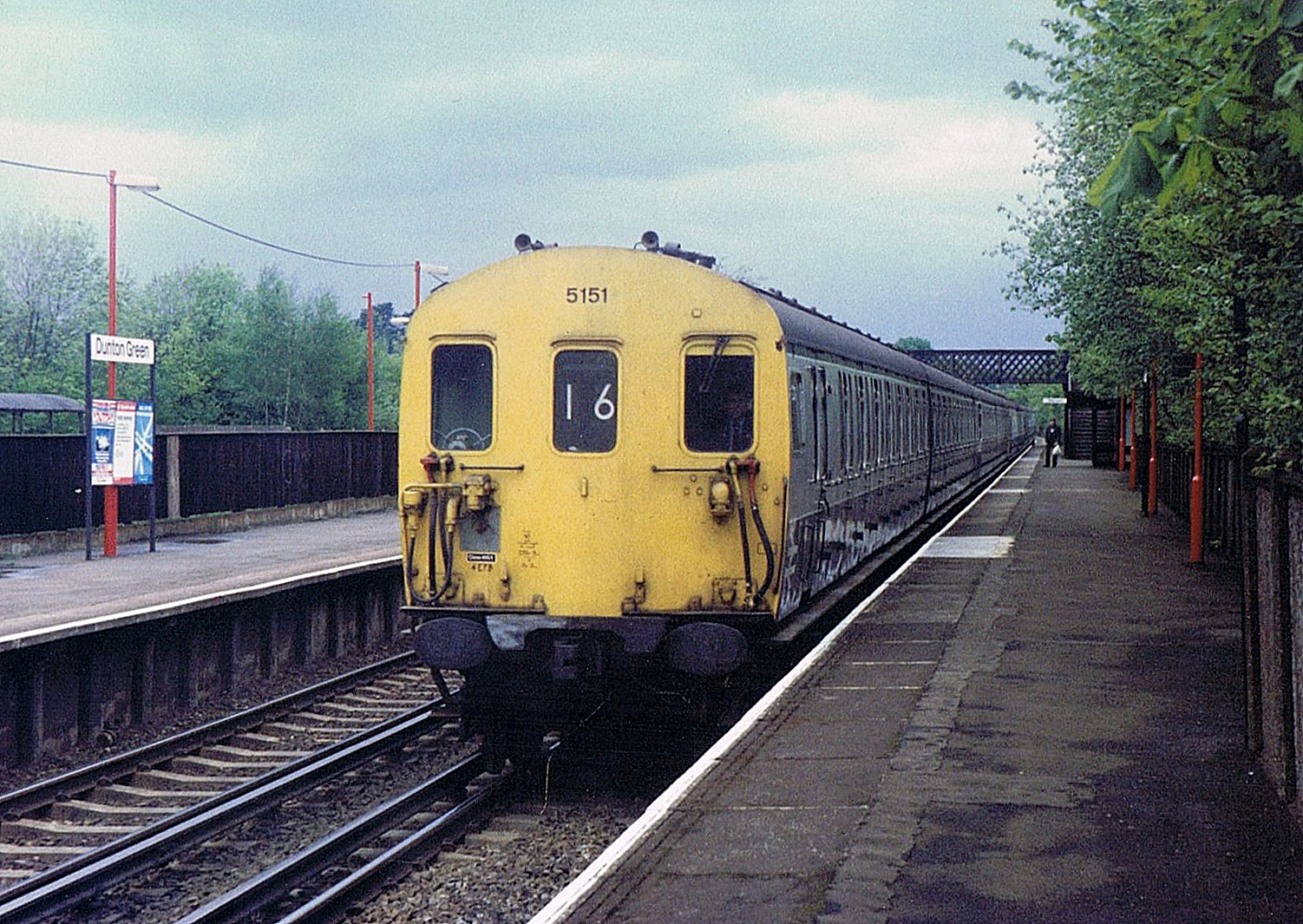
Dunton Green. British Railways accepted this offer subject to the condition that a commuter service be provided, thereby enabling it to cease its annual subsidy of £8,700 towards the additional bus services laid on following the line's closure.
Intervention of the Kent County Council
The withdrawal of the backer following the refusal of his planning application to develop land at Westerham Station cast serious doubt on the proposed re-opening. In the Association's Annual General Meeting on 2 November 1963, members were informed that efforts to raise the £30,000 plus £10,000 for equipment had failed. Furthermore, British Railways were now in talks with the
Kent County Council regarding the sale of the line to enable the construction of the proposed "Orbital Motorway", what would later become the
M25 motorway.

The
A21 near Chevening crossing the route of the line running left to right
More positive news was received later in November 1963 when it was revealed that not only had a new backer been found, but also that terms were agreed with British Railways for the sale of the land to the Association. However, one month later, Kent County Council contacted the Association and informed them that the Council's intended purchase of the land would save taxpayers the sum of £120,000 and, furthermore, that in the event British Railways were unwilling to sell the land to it, as had been intimated,
compulsory purchase powers would be used. Faced with the prospect of a compulsory sale, British Railways now broke off negotiations with the Association and agreed to sell the line to the Council.
However, in April 1964, the Council indicated their willingness to lease the line to the Association, thereby ensuring the line's continued existence if the Association were to come up with the cost of constructing a bridge over the railway cutting at Chevening to enable the
Sevenoaks bypass to cross it. The cost of this bridge was estimated by the Council at £14,000, added to which was the annual rent of the line of £3,000. The estimate of £14,000 was revised upwards in August 1964, to a figure of £26,215 (equivalent to £355,800 in modern currency) which was to be paid by 24 August, otherwise works would commence to infill the cutting.
Purchase of rolling stock
In the meantime, the purchase of several former
Metropolitan Railway coaches and a
Class H 0-4-4T locomotive No. 31263 had been agreed and were awaiting collection. Initially, British Railways had allowed the stock to be stored at Dunton Green, but since the intervention of the Kent County Council, it became 'reluctant' to allow this and threatened to scrap the stock were it not collected. The coaches were loaned and later sold to the
Keighley and Worth Valley Railway and the locomotive to the
Bluebell Railway where it remains today.
Final days
By November 1964 the funds to construct the bridge had still not been found and, following the infilling of the Chevening cutting, the Association realised that their plans to re-open the line could no longer be realised. This was notwithstanding intervention by the MP for
Faversham,
Terence Boston, who unsuccessfully attempted to persuade the new
Labour Minister of Transport,
Tom Fraser, to hold an enquiry into the County Council's plans to convert the line into motorway.
In autumn 1965, the Association merged with the
Kent & East Sussex Railway Preservation Society. By March 1967 the railway track had been lifted and Westerham Station demolished. Works on the section of the
M25 from Sundridge Road to Westerham commenced in December 1976 and were completed in December 1979.




 66,640
 0.132 million


