Showing posts with label Cornwall. Show all posts

Friday, 3 August 2018

Padstow - what were they thinking?


(All pics copyright Steve Sainsbury/Rail Thing)


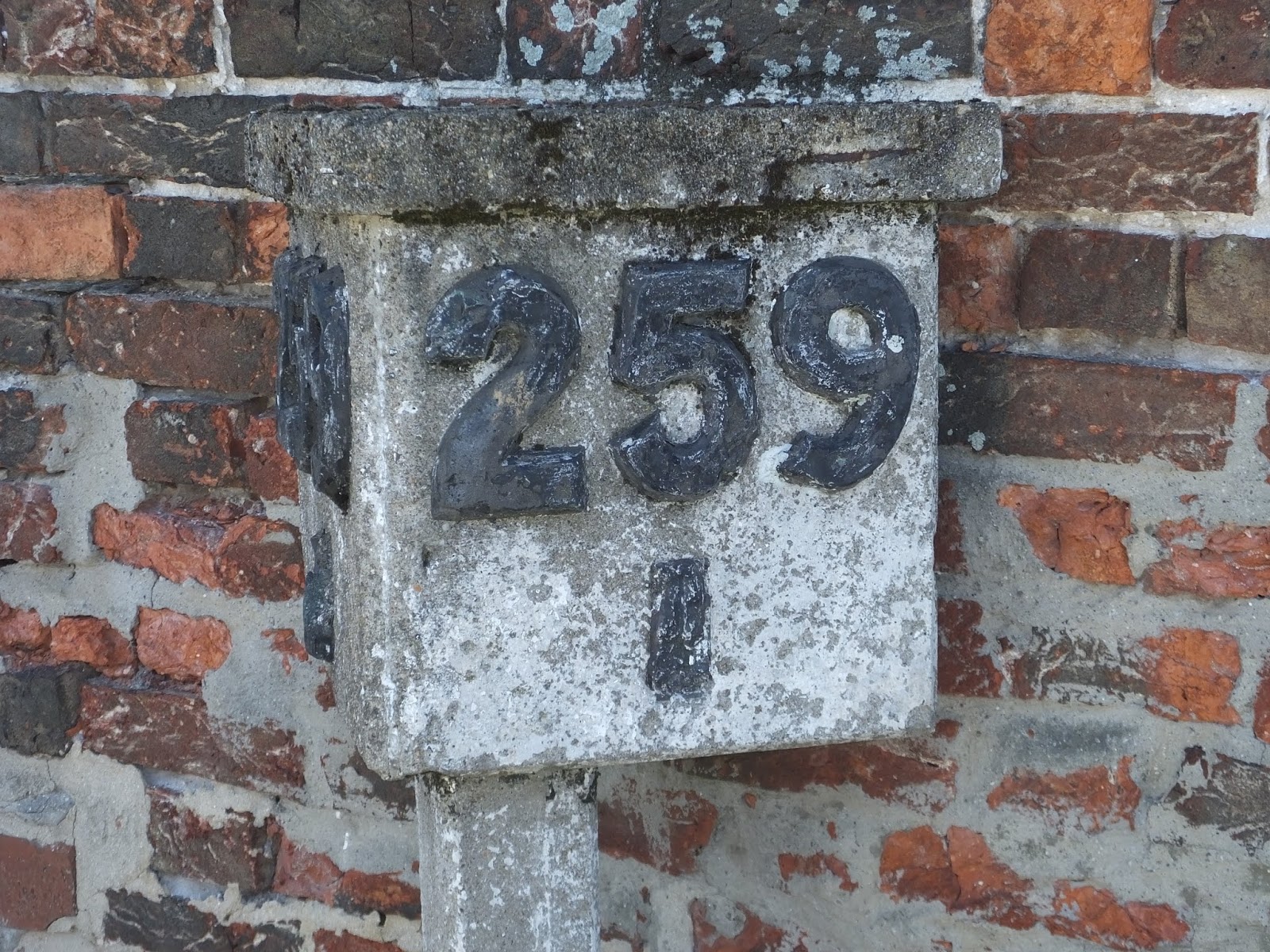
Padstow was once the furthest point you could reach on the Southern Railway/Region from London - 259 and a quarter miles. You can still see the milepost if you know where to look in Padstow, but not at its original location.

Padstow had two lines, one from Bodmin Road on the GWR Cornwall Main Line and the other via Okehampton and Halwill Junction on the North Cornwall line. Both lines were closed in 1967, just before the summer season. I have read that Padstow couldn't wait to lose its railway, but I suspect this is apocryphal!

Today Padstow is a huge tourist draw, we were down there for a week in June, The location is fantastic and as someone used to the crowds in the various Disney parks around the world I didn't find the crowds too daunting!

But today you can't reach Padstow by train. It is ridiculous. A railway to Padstow would take many cars and lorries off the road and would be an attraction in itself. It will also make both Padstow and Wadebridge resilient to transport problems as the energy crisis deepens. The sad thing is that much of the route is still there, tantalisingly close, ending in a field somewhere to the east of Wadebridge. The Bodmin and Wenford Railway run heritage trains on the line, and it's a very nice set up.

Wadebridge is the other issue. A large town for Cornwall with no modern transport link. It needs one. The line would run from Bodmin Road through Bodmin and Wadebridge to Padstow. Ideally it would offer a cheap transport option for passengers and freight, with premium rate heritage trains in the summer. Incredibly street running has already been proposed for the section through Wadebridge, which would link the line to the east to the existing and fully preserved for future rail use stretch to the west of Wadebridge which currently serves as a cycleway.

It seems odd that Padstow lost its trains while other smaller, or similar sized, resorts kept theirs. St Ives, Newquay, Falmouth and Looe now have thriving branch lines. I suspect the reason was regional rivalry plus the odd operating set up on the lines at Bodmin with two termini rather than a single through station. It could be that Bodmin needs a new through station to make the journey quicker.

The whole issue underlying this is that many lines were closed in haste, and would never close now. In the 60s we thought road traffic would last for ever, we are a lot wiser now! All year railways are needed in many parts of the UK, some routes are already partially or even completely restored by heritage groups. Swanage is now operating both  heritage and Network trains, the line has become 'real' again and Swanage is thriving because of it. Elsewhere some Network lines have heritage aspects to them, the Looe line for example. 

Padstow is a honeypot just waiting to be reopened. What are we waiting for?

Wednesday, 24 August 2016

Bow 1977

BOW


(All 9.6.1977 copyright Steve Sainsbury/Rail Thing)


Five years after the Okehampton line closed to passengers I took these photos of Bow station.

I'd travelled on the route in the summer of 1972, just before closure to passengers. At that time the line was still double track and I'd managed to get the seat at the front of the DMU which gave me a view of the line ahead. It was impressively engineered and was clearly a former main line. The trains still stopped then at Bow, as well as the other intermediate stations at North Tawton and Sampford Courtenay. The whole trip up from Exeter had been steeped in Southern Railway heritage, despite the line being by then under the control of the Western Region. I was glad I got to travel on this lovely stretch of line as at the time it perhaps seemed that it was gone for good.

It isn't of course. Passenger trains run again - after a fashion - to Okehampton, at least in the summer. But the big development of course is the inevitability of the line's reopening through to Plymouth, inevitable because with sea level rise accelerating and storms getting worse the fantastic line through Dawlish is under a death sentence, although that may well be an extended one. The effect of storm damage to the coastal route is to effectively cut off much of Devon, including the resorts of Torquay and Paignton, together with Plymouth, plus the whole of Cornwall, from the rail network. This of course happened a couple of years ago, and the economic effects were dreadful. Each year the coastal route becomes more vulnerable and more expensive to keep open. A second route is absolutely essential and most of it of course is still there - the line to Meldon to the north of Dartmoor, and the line from Plymouth up to Bere Alston on the western flank, with reopening a further six miles to Tavistock in the pipeline. The stretch in between, only around 20 miles, is still there waiting for the tracks to be relaid.

Hopefully full use will be made of this asset in the future, with regular express and local services (plus freight of course) making full use of the brillinatly engineered ex-SR route between Plymouth and Exeter, feeding far more traffic on to the Exeter-Salisbury-Waterloo route. Capacity needs to be increased, but it's all possible with redoubling of the Exeter-Salisbury line now under way. And hopefully Bow station, and all the other intermediate stations along the route, also get their trains back. Let's do this properly!

Sunday, 17 May 2015

Early days at Launceston


(All 13.8.1984 copyright The Rail Thing/Steve Sainsbury)

Back in pre-internet, pre-digital days it could sometimes be quite hard to get information - and photos! I knew there was some sort of narrow gauge set up at Launceston, but didn't know much else. I did know it was narrow gauge rebuild on a closed SR line that used to serve Launceston in Cornwall, but not much else.

I turned up on a drab August day, there were no trains running (I was working anyway so couldn't have travelled) and the place had a run down air about it - but isn't that one of the things we used to find interesting in the rail world? I love the advertising for the 'Launceston Steam Railway' painted on the end of an old van. There was a steam loco on view and a carriage, but there was nobody about so I couldn't find out any more. 

I know the line is still there, runs trains in the summer and is looking to extend. So this was early days for a line that is now established and one I really need to go back to when I get the chance!

Further information (via Wikipedia)

The Launceston Steam Railway is a 1 ft 11 12 in (597 mmnarrow gauge railway operating from the town of Launceston in Cornwall. The railway is built on the trackbed of the North Cornwall Railway to 1 ft 11 12 in (597 mmnarrow gauge and runs for 2½ miles to Newmills, where there is a farm park.

History

Standard gauge railway

The first railway to reach Launceston was the Launceston and South Devon Railway, opened in 1865 from Launceston to Plymouth, and later absorbed into the Great Western Railway. In 1886 the London and South Western Railway opened its railway from Halwill Junction, extended to Padstow in stages in the 1890s, and later part of the Southern Railway. The two Launceston stations were side by side: the Great Western closed in 1962 and the Southern in 1966.

Narrow gauge revival

In 1965, trainee teacher Nigel Bowman rescued the steam locomotive "Lilian" from the Penrhyn Slate Quarry in North Wales, and restored her to working order at his home in Surrey. He then set about looking for a site to build a railway for Lilian to run on, and settled on Launceston in 1971, after considering a stretch of trackbed from Guildford to Horsham and the Lynton & Barnstaple Railway. Purchase of the trackbed took several years, and the first ½ mile of track opened on Boxing Day 1983. The railway was extended progressively, the latest opening to Newmills in 1995 bringing the line to its current 2½ mile length.
[hide]
Launceston Steam Railway
North Cornwall Railway to Halwill Junction
Launceston
Mill leat
River Kensey
Farm Crossing
Hunt's Crossing
Farm Crossing
Canna Park
Newmills
North Cornwall Railway to Padstow

Route

The LSR starts at a new station just west of the original LSWR station, which is now an industrial estate. Launceston station is the main station on the railway, and the sheds and engineering facilities are located here. The line runs from the station through a cutting, passing under a road bridge and aqueduct carrying a mill leat, before crossing the River Kensey on a two-arch viaduct. The line is now on an embankment and crosses a bridge over a farm track before arriving at Hunt's Crossing, where it is planned to lay a passing loop. After Hunt's Crossing the line crosses two farm crossings and then reaches Canna Park which was the temporary terminus before the extension to Newmills. From Canna Park there is a fairly short run to Newmills, the terminus. Adjacent to the Newmills station is the Newmills Farm Park.

Locomotives

All public train services are operated by the steam locomotives, whilst the internal combustion locomotives are used for maintenance work.

Locomotives

All public train services are operated by the steam locomotives, whilst the internal combustion locomotives are used for maintenance work.

Steam locomotives

NumberNameBuilderTypeWorks NumberBuiltOriginNotes
LilianHunslet0-4-0 ST3171883Penrhyn QuarryNew boiler fitted in 1993 and tender added in 2008
CovertcoatHunslet0-4-0 ST6791898Dinorwic QuarryCab and tender added at Launceston
VelinheliHunslet0-4-0 ST4091886Dinorwic QuarryPrivately owned by James Evans, ex. Inny Valley Railway.
DorotheaHunslet0-4-0 ST7631901Dorothea slate quarryRestored over 22 years by Kay Bowman, first steamed in November 2011 and entered passenger service in 2012.
89PerseveranceC. Parmenter4wVBT2004Constructed on a Hudson chassis

Internal Combustion and Battery Electric[edit]

NumberNameBuilderTypeWorks NumberBuiltOriginNotes
38English Electric2w-2-2-2wRE7611930Post Office RailwayOn display in the museum
42English Electric2w-2-2-2wRE1930Post Office RailwayTo be rebuilt as railcar power bogie
Motor Rail4wDM56461933Grove Heath, Ripley, Surrey
N. Bowman4wBER1986Inspection trolley
Launceston SR4wDER2004Inspection trolley

Tuesday, 26 August 2014

Tavistock Ho!


(Bere Alston 29.8.1972 copyright Steve Sainsbury/Rail Thing)


News just in is that the Bere Alston to Tavistock line will now be rebuilt. ('And about time'!) I suspect most of you are thinking.

Take a look at the rather dire picture illustrating this piece. I'd only just passed 16 and had only been taking photos for a year is my excuse, but in a way it captures everything about this line. It was a snatched shot taken from the Gunnislake train as it reversed at the station. There are a few passengers on the platform, which shows that even in the nadir of rail travel in the UK this line was still fairly well used.

There's a very evocative final paragraph in the seminal work on these routes - The Withered Arm by T E Roche. The book had described this network of routes, and the sense of shock that a MAIN line could be closed. The author takes a little walk beyond Bere Alston, just a short while after closure, and almost talks himself into believing the line is still open, because the exit to the north is on a curve (as can be seen in the photo above) and nothing seems to have changed. And then he suddenly chances upon the buffers and stares in disbelief at the empty trackbed beyond.

Like the Waverley route the main SR route to Plymouth once boasted a network of branches off it, and these all needed to be closed before the final axe could be yielded. But the Callington branch was different, road services could NEVER replace the trains because of the way the Tamar cut a meandering course, isolating village en route from easy road access. So the line remained, though spitefully the last few miles from Gunnislake to Callington WERE closed. What it meant was that a good few miles of the old main line, from which the Gunnislake line branched off also had to be kept open. Six miles north of Bere Alston was the large and important town of Tavistock, which once boasted two stations, but this short piece of the line also had to close, so fanatical were the axemen of the time. Further on, at Meldon Viaduct, the main line reappeared, freight for a few miles, then Okehampton was allowed a passenger service - but even this was closed (to passengers) in 1972. I was there a few weeks before this stretch of line also closed to passengers, approached from Exeter of course. Freight kept going, and in recent years passenger services have been reintroduced on a few days a year. The line lives on here as well, if currently truncated!

Of course back in 1972 many people seriously believed the railways were finished, a withering rump remaining for those too poor to afford cars. Things have changed completely now, with rail in the ascendent and busier than it's been for almost a hundred years. We feel sorry for those people that are still tied to their cars, and now it's roads that are in decline (terminal this time).

Yet we're stuck with a fragmented rail network, designed for a world that's gone, and we need to get our railways back as quickly as we can, before the roads fail completely. There is the additional problem of climate change or, as it's now being rebranded, climate chaos. We all saw the terrible scenes at Dawlish last winter, when we were hit by ten storms in three months thanks to the stuck jetstream, directly caused by rapidly rising temperatures over the Arctic. We may find that many future winters are as extreme or more so, coupled with rapidly rising sea levels this spells the slow end of the 'alternative' route between Exeter and Plymouth via Dawlish, and the rapid rise of the Okehampton 'alternative'. Whilst we may get away with closing the ONLY route to Torbay, Plymouth and resurgent Kernow for now, and for a few weeks, that won't be acceptable in years to come when the road option is no longer available.

This is the REAL agenda behind the reopening of Tavistock. It may be dressed differently for public consumption, but I think we all know what this is really about. With Tavistock back on the network that gap to Meldon will seem tiny - smaller than the Borders Railway that will reopen next year for example (and through more challenging terrain!) Within a few years no doubt a solid and financed plan to close the link and give the west a second route to Plymouth, Torbay and Kernow will emerge. 

But this is just one reopening. To build resilience and keep our economy moving as the oil age ends we'll need a thousand .....